Artificial intelligence has moved from experimental technology to everyday workplace reality. In 2026, AI tools write drafts, analyze data, answer customer questions, and assist decisions across industries from finance to healthcare to manufacturing. The transformation is no longer a prediction — it is the current state of work.
From Pilots to Production
The most significant change in 2026 is scale. Where companies once ran small pilots, AI tools are now embedded in standard workflows: email assistants draft messages, meeting tools generate summaries, and data platforms surface insights that once required analyst teams.
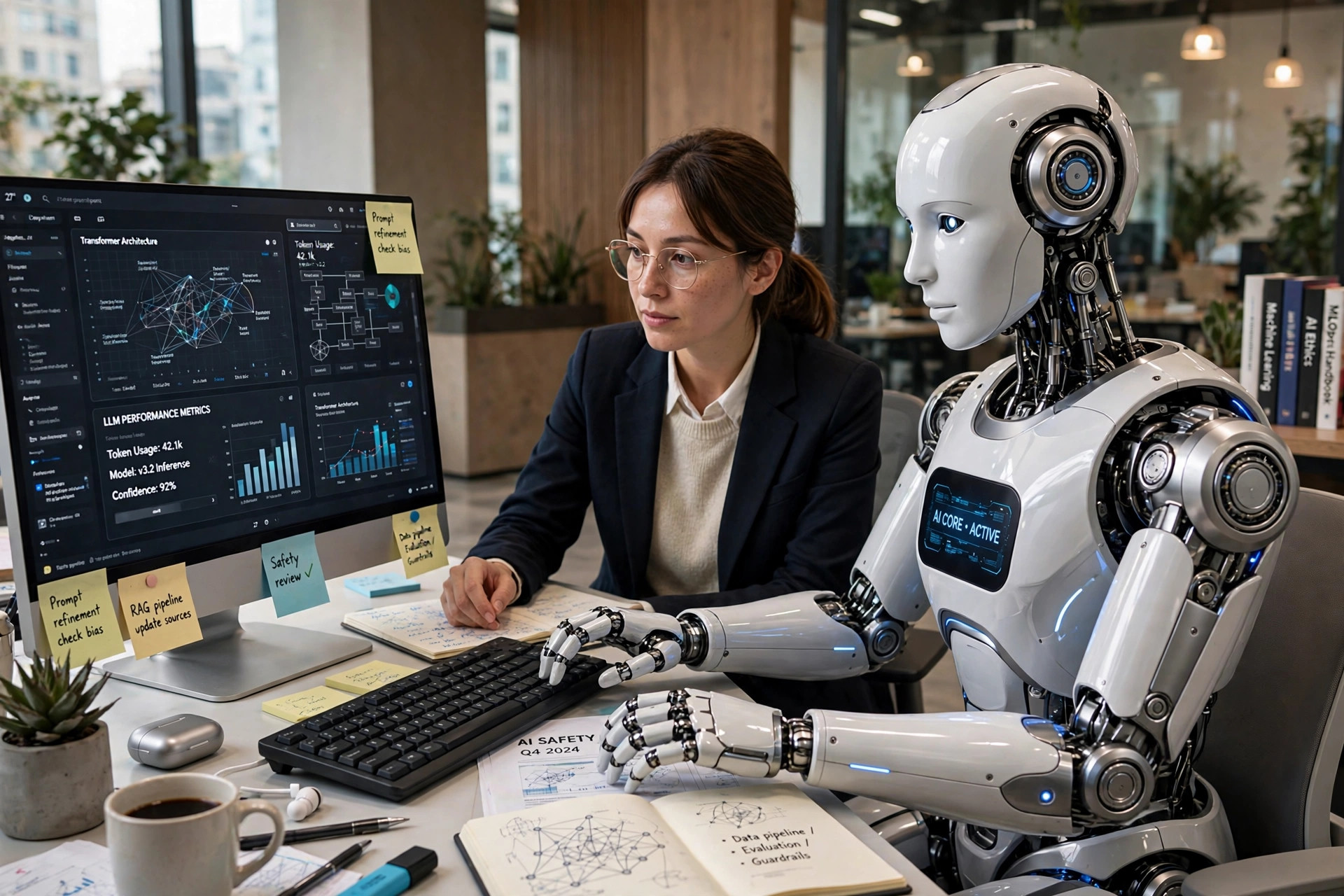
Trends indicate the question has shifted from "should we use AI?" to "how do we use it well?" Organizations are developing guidelines and training to manage accuracy, privacy, and the role of human judgment. For workers, routine tasks are increasingly AI-assisted, freeing time for creativity and complex decisions — though the transition is not always comfortable.
Knowledge Work Gets an Assistant
White-collar professions see the most visible changes. In marketing, law, consulting, and software development, AI handles first drafts, research summaries, and code suggestions. Professionals describe workflows where the human role shifts toward review, refinement, and judgment.
Analysts suggest the augmentation model — human plus AI — is proving more durable than early fears of replacement. The tools are powerful but imperfect: they produce confident-sounding errors and miss context. Human oversight remains essential, and the most effective users learn to direct, verify, and improve AI output.
Customer Service Transformed
Customer-facing roles were among the earliest reshaped by AI. Chatbots and voice assistants now handle a large share of routine inquiries, from order tracking to troubleshooting. Modern assistants maintain context across conversations, access knowledge bases, and escalate complex or sensitive issues to humans.
For businesses, the appeal is faster response times and lower costs. For human agents, roles evolve toward handling exceptions — the difficult cases automation cannot resolve. Many report the work is more challenging but more meaningful, even as headcount in some operations has declined.
Manufacturing and Physical Work
AI's impact extends beyond offices. In manufacturing, AI optimizes production schedules, predicts equipment failures, and guides quality control with computer vision. Warehouses use AI for inventory and robotic coordination. In healthcare, AI assists imaging analysis and documentation, with professionals making final decisions.
Trends indicate the integration of AI with robotics is advancing rapidly. Systems combining physical capability with intelligent control are expanding what automation can do in unstructured environments, from construction sites to hospitals.
The Skills Question
The most important workplace story of 2026 may be the renegotiation of what skills matter. As AI handles routine cognitive work, critical thinking, creativity, emotional intelligence, and ethical judgment are increasingly prized. Training programs now include AI literacy, and companies invest in reskilling workers whose roles are changing.
Analysts suggest the best-positioned workers are not necessarily the most technical but the most adaptable: those willing to learn new tools and focus energy where human judgment adds the most value.
Challenges and Concerns
- Accuracy and trust: AI can produce plausible but incorrect output; verification workflows are essential.
- Privacy and data: Workplace tools process sensitive information, raising security questions.
- Equity: Uneven access to tools and training may widen gaps.
- Displacement: Some roles are genuinely shrinking, and transition support matters.
What to Watch Next
The trajectory points toward deeper integration: more capable assistants, tighter links between AI and business data, and evolving job roles. Regulatory frameworks are developing around transparency and worker protections. For individuals, the practical takeaway is consistent: engage with the tools, develop judgment to use them well, and invest in the human capabilities machines cannot replicate.
Training and change management are emerging as the real bottlenecks — not the technology itself, but organizations' ability to absorb it thoughtfully and redesign workflows around new capabilities.