
The global transition to renewable energy keeps accelerating, and 2026 is on track to be another record year for clean power. Solar panels, wind turbines, and battery storage are being installed at unprecedented rates, reshaping electricity systems on every continent.
Records Keep Falling
By nearly every measure, renewables extended a remarkable run through the mid-2020s. Annual solar and wind additions keep growing, with solar achieving installation rates that seemed implausible a decade ago. The growth is genuinely global: China installs the most, but the United States, India, the EU, Brazil, and countries across the Middle East, Africa, and Southeast Asia are all deploying at significant scale.
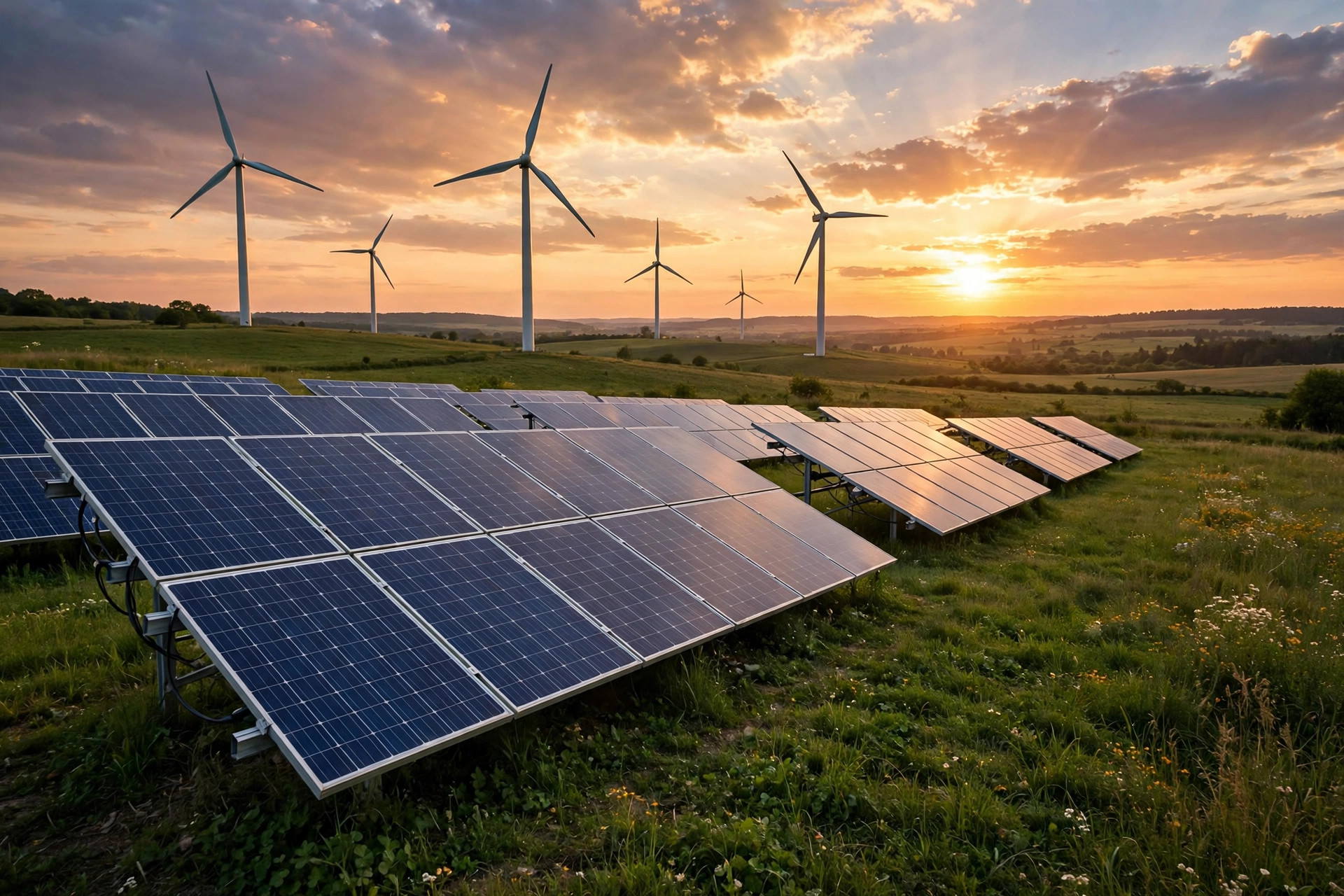
Trends indicate renewables are now the cheapest source of new electricity in most markets. This economic reality — more than any single policy — is the fundamental engine of the transition. When solar and wind beat fossil fuels on cost, investment follows.
Solar's Extraordinary Run
Solar deserves special attention. Manufacturing scale has driven panel prices down dramatically, installation techniques have improved, and efficiency keeps rising. Deployment now proceeds at a pace that consistently surprises forecasters, who have repeatedly revised estimates upward.
In 2026, solar is not an alternative source — in many regions it is simply the default choice for new generation. Rooftop installations also keep growing as costs fall, and in sunny regions the combination of rooftop panels and home batteries is reshaping consumers' relationship with the grid.
Wind Power's Steady Contribution
Wind, onshore and offshore, remains the second pillar of the buildout. Onshore wind is mature and cost-competitive; offshore continues advancing with larger turbines despite cost pressures in some markets from supply chains and financing.
Wind's complementary profile — often generating when solar does not, such as at night — makes it an essential partner. The combination of solar, wind, and storage is proving more powerful than any single technology alone.
The Storage Breakthrough
Battery storage has changed the renewable conversation most profoundly. Intermittency — generating when conditions allow rather than when demand peaks — was long cited as the fundamental limitation of solar and wind. Grid-scale batteries now address it at rapidly growing scale.
Lithium-ion costs have fallen dramatically, and storage paired with solar and wind projects has surged. In several markets, solar-plus-storage now competes directly with gas plants for evening power. Trends indicate storage deployment is still in its early innings relative to its potential.
Electrification Expands the Impact
Clean electricity matters most when it powers things that once burned fossil fuels. Electric vehicle adoption keeps growing globally, with strong momentum in China and expanding markets elsewhere. Heat pumps displace gas and oil heating across temperate regions. Each EV and heat pump raises electricity demand — which is why the parallel renewable buildout matters so much.
Challenges on the Road Ahead
- Grid infrastructure: Transmission upgrades lag generation growth in many regions.
- Permitting: Approvals for projects and lines remain slow in numerous jurisdictions.
- Supply chains: Manufacturing concentration raises resilience concerns.
- Financing: Higher capital costs in developing economies slow deployment where it is needed most.
- Long-duration storage: Batteries handle daily cycles; weeks-long backup is still developing.
What to Watch Next
The 2026 story is remarkable momentum tempered by real obstacles. The direction is clear — clean energy wins on economics and scales at historic rates — but pace depends on infrastructure, policy, and financing. Analysts suggest watching grid investment, storage cost trends, and electrification rates as key indicators. The transformation of world energy systems is a defining story of the decade, and 2026 is writing a significant chapter.
Workforce development is the quiet enabler of the transition: training installers, engineers, and grid operators at the speed the buildout demands.