
The US economy in 2026 remains the single most influential force in global markets. With its massive consumer base and deep capital markets, what happens in America ripples outward worldwide. This update examines where the economy stands — on jobs, inflation, growth — and the questions shaping what comes next.
The Jobs Picture: Resilient but Evolving
The American labor market has been a standout story of the decade. Employment recovered strongly from early-2020s disruptions, and in 2026 the picture is one of continued resilience with signs of normalization. Unemployment stays low by historical standards, and wage growth has moderated toward sustainable levels.
The structure of work keeps evolving. Remote and hybrid arrangements have become permanent features in many industries, with implications for commercial real estate and regional migration. Analysts suggest labor data remains among the most important indicators to watch, since a strong job market supports consumer spending — the engine of the US economy.
Inflation: The Long Road Back
Inflation defined the early 2020s, and its retreat has been one of recent years' most consequential developments. By 2026, price growth has come down substantially from peaks, though the journey has not been perfectly smooth. Services inflation and housing costs have taken longer to cool than goods prices.
For consumers, the improvement is real: prices are no longer rising rapidly. Yet cumulative increases mean everyday costs remain higher than before the inflation episode — the distinction between the inflation rate and the price level is central to public sentiment. The Federal Reserve continues weighing inflation data against employment and growth in its decisions.
Growth: Steady, Not Spectacular
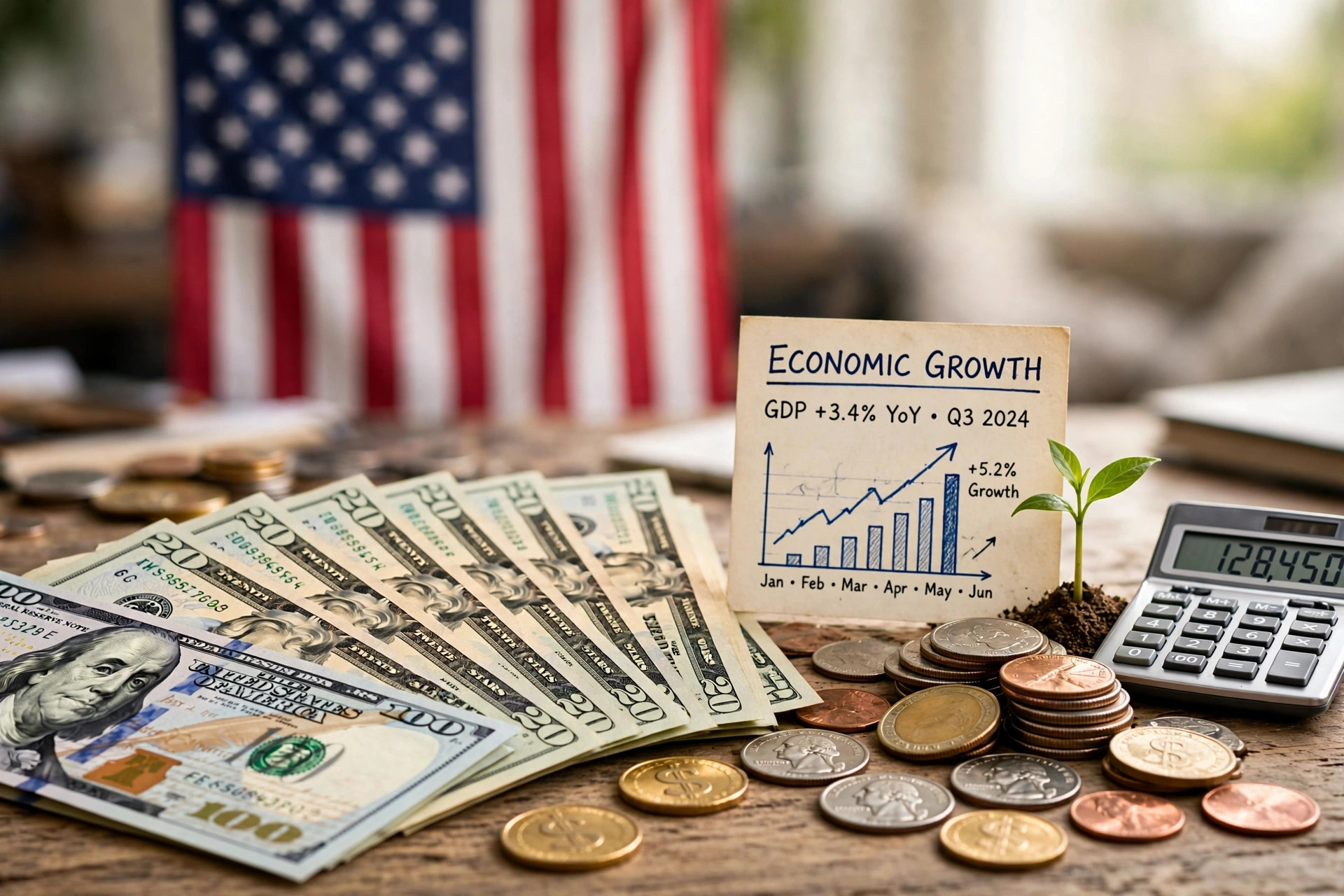
US growth in 2026 has been steady rather than spectacular. Consumer spending — roughly two-thirds of economic activity — has held up, supported by employment strength. Business investment is mixed: technology and infrastructure sectors invest aggressively, while others remain cautious amid borrowing costs.
One notable feature is breadth. Unlike cycles driven by a single sector, growth spans services, manufacturing, and technology — a diversity many economists see as resilience. Government infrastructure spending provides additional demand in certain areas.
Housing: Still the Pressure Point
Housing generates enormous public attention. Home prices rose sharply in the early 2020s, and mortgage rates followed as policy tightened, leaving affordability stretched. In 2026, inventory shortages in many regions support prices even as borrowing costs limit buyers. Renters face moderated but still elevated costs in major metro areas. Any meaningful improvement in affordability would be widely felt across the economy.
The Federal Reserve's Path
The Fed's decisions remain the most watched variable in American economic life. After aggressive tightening, the central bank has moved toward careful calibration, adjusting gradually as conditions evolve. Market participants parse every statement for clues, while the Fed emphasizes data dependence — particularly on inflation and employment. The era of rapid rate moves appears behind us.
What to Watch Next
- Consumer resilience: Will spending hold if job growth cools?
- Productivity and AI: Can technology gains support growth without reigniting inflation?
- Fiscal policy: Spending and tax decisions will shape demand and deficits.
- Global linkages: Trade and overseas developments feed back into the US outlook.
The base case remains constructive: an economy that absorbed significant shocks and kept moving. But analysts caution the margin for error is thinner than it appears, and vigilance among policymakers, businesses, and households remains warranted.
Another factor worth noting is the interplay between monetary and fiscal policy. While the Federal Reserve manages interest rates, decisions in Washington on spending, taxation, and trade shape the environment in which those rates operate. When the two pull in the same direction, effects compound; when they diverge, uncertainty rises. Analysts suggest that policy coherence — or the lack of it — will be an underappreciated driver of outcomes in the coming year.